I studied pure mathematics (major) with computer science (minor) at the Technical University of Munich (TUM), with an academic focus on quantum mechanics — the subject of my final thesis. I complemented my degree with coursework in neural networks at TUM and have trained custom neural networks locally and in-cloud using AWS EC2.
That background shapes my interests and everything I build: rigorous mathematical foundations, an instinct for computational efficiency, and a natural pull toward problems at the intersection of mathematics, physics, and software.

A selection of things I've built — spanning finance, quantum mechanics, neural networks, systems dashboards, and AI-powered platforms.
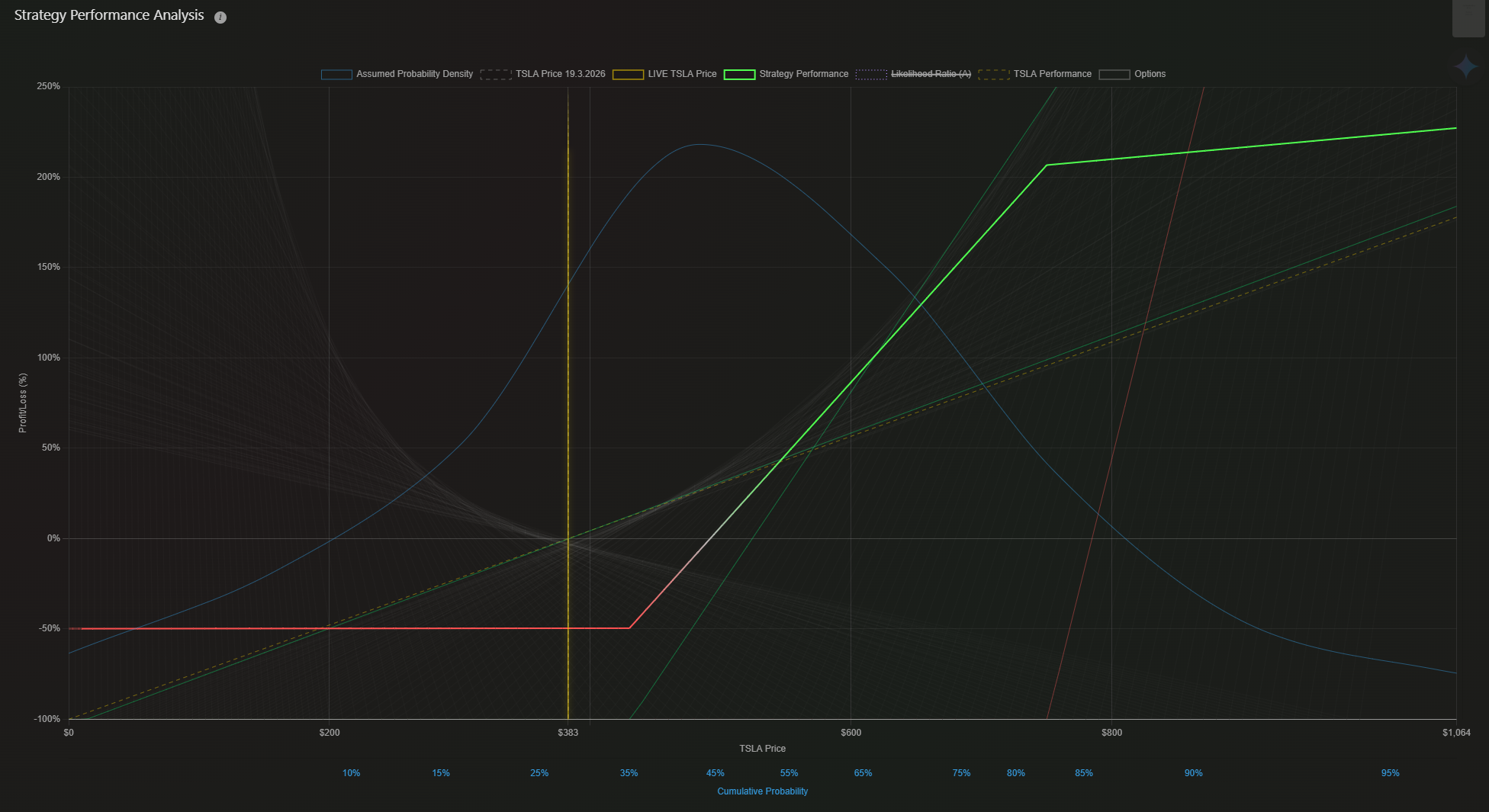
A quantitative options-trading platform built entirely on a serverless AWS stack — 14 Lambda functions (Go, arm64), DynamoDB, S3, EventBridge, and CloudFront — achieving a true scale-to-zero architecture where the infrastructure idles at near-zero cost when unused, with no always-on servers. A search manager Lambda distributes work across a dynamic fleet of calculation node Lambdas, each running parallel goroutines to find optimal investment strategies in real time. The math engine features a custom linear equation solver and spline-fitting, derives implied probability distributions via IV-smoothed curve fitting and Black-Scholes, runs Monte-Carlo simulations for CAGR estimation (brute-force simulation replaced by FFT convolution), and applies Grid Search Gradient Descent with Sobol quasi-random seeding (ideally placed for high-dimensional gradient descent optimization) to locate optimal strategies. A congress-scraper Lambda downloads financial disclosure PDFs on a daily schedule, runs automated AI analysis to extract trades of US congress members, and writes structured results to DynamoDB — giving users an edge from public insider data. EventBridge cron triggers schedule user-defined automated actions — rebalancing positions, running fresh strategy scans, or firing alerts on a custom timetable. An embedded AI chatbot, powered by a Gemini Lambda with a domain-tuned system prompt, guides users through the platform and answers options-trading questions directly in the browser. A companion Go CLI terminal offers the same calculation, portfolio, and scheduling features from the command line, including a permanent proxy mode that auto-polls the cloud for queued trades and executes them locally with the user's own broker API keys — designed for trustless order execution. Every component — compute, storage, scheduling, and delivery — is serverless, keeping operational overhead minimal and costs proportional to actual usage.
An AI-powered autonomous web development platform. Users describe a website in natural language; the platform builds, refines, and publishes it autonomously. A three-pane interface — projects sidebar, chat window, and live iframe preview — streams real-time status updates over WebSocket while the Claude Code SDK, running inside an AWS Fargate container, executes a dynamic five-step agentic workflow: a Haiku-powered gate routes the request, optionally triggering an Opus deep-planning pass before handing off to iterative Sonnet implementation and self-assessment cycles. Each step uses the model best suited to its cost/quality tradeoff — Haiku for cheap routing, Opus for thorough design, Sonnet for building and review. A finalization step always runs before exit, writing a structured handoff document to S3 so every future session resumes with full context. A human-in-the-loop grace period lets Claude ask clarifying questions mid-build. A third Lambda renders reference URLs to HTML via Playwright before each Fargate launch, giving the agent full context on referenced websites. A Go backend handles JWT authentication, credit billing, and WebSocket session management. Published sites are served over HTTPS from S3 immediately after each build completes.
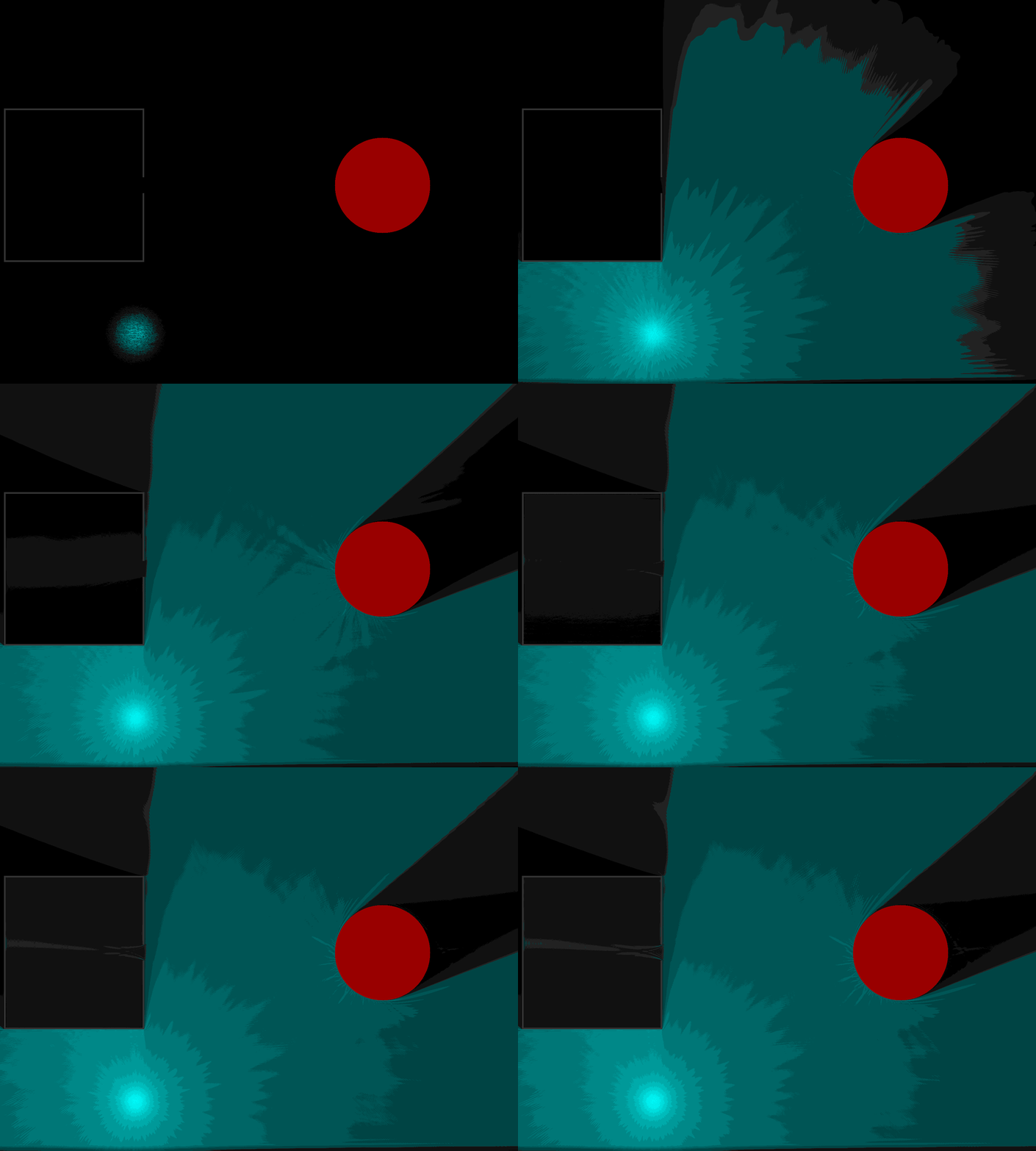
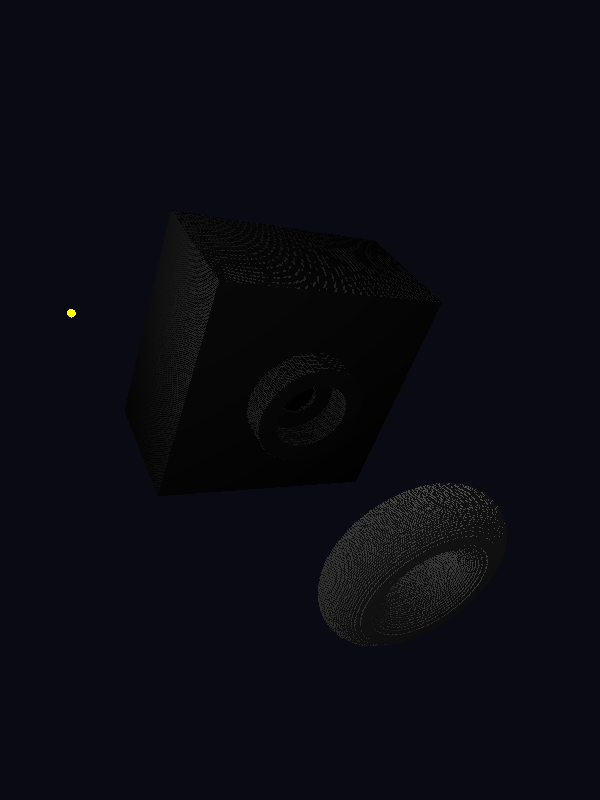
A numerical solver for the time-dependent Schrödinger equation applied to quantum optics. The wavefunction field ψ(r,t) is evolved using 4th-order Runge-Kutta (RK4) time integration over a voxel grid, with the Laplacian discretised via a 7-point finite-difference stencil. Materials are encoded as complex-valued (ℂ) potential fields: the real part shifts the local refractive index, the imaginary part induces exponential absorption — giving rise to mirrors, lenses, walls, and apertures purely from the potential field. Incoherent light sources inject multiple Gaussian pulses per timestep at randomised frequencies and directions, averaging over many realisations to produce realistic diffraction and interference patterns. Scenes include a 3D pinhole camera imaging a reflective sphere (with geometric magnification validation), 2D parabolic mirror and glass lens setups, and double-slit interference experiments. Intensity accumulates as |ψ|² over the full run — equivalent to long-exposure quantum photography. The CPU backend is written in Go; a GPU-accelerated port using the Taichi framework (Python) targets CUDA. A pin-hole camera and virtual sensor on its back allows the rendering of perspectives in a scene. Large-scale 3D simulations — grids up to 1000×480×480 (~28 GB RAM) — are deployed to AWS EC2 spot instances (c6i family) via Terraform, with output frames synced to S3 in real time.
A dashboard for monitoring and managing an off-grid sustainable estate in Portugal. Tracks real-time energy flows across geothermal heat pumps, solar PV, 500°C sand-battery thermal storage, and biogas systems — turning a complex multi-source energy stack into a single coherent interface.
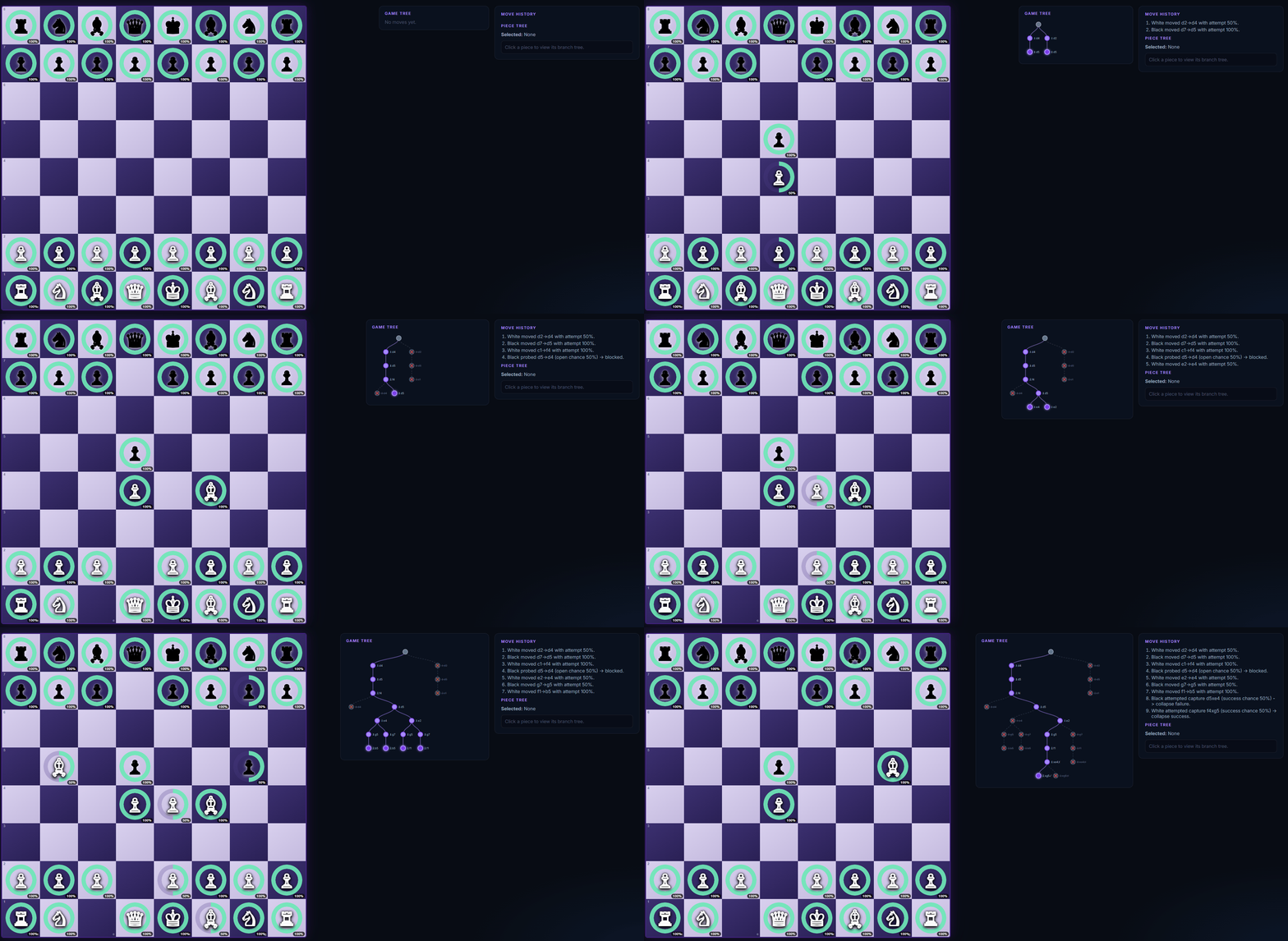
Chess where pieces exist in quantum superposition across parallel board branches. Probabilistic moves split reality; captures collapse it. A bespoke engine tracks every branch, weight, and per-piece history tree — rendered live in the browser with zero dependencies. Players can create a room and invite friends to play online — real-time multiplayer is handled via an AWS API Gateway WebSocket backed by a Go Lambda, with game state persisted in DynamoDB. A custom neural network trained on AWS EC2 via self-play reinforcement learning serves as the AI opponent. The model is exported to ONNX and runs entirely client-side in the browser via ONNX Runtime Web with WebAssembly — no backend inference call is made after the initial model fetch.
An on-demand Factorio game server on AWS Fargate with a web control panel. Start and stop from a browser, pick any Factorio version and resource tier, and let it run — a Node.js sidecar monitors players via RCON, streams live UPS and player data to S3, and auto-shuts down after 15 minutes idle. Saves sync durably to S3 on every stop and the server scales to true zero when nobody is playing.
TeslaMate on Fargate — a multi-user, on-demand Tesla data logger built on AWS. Users sign up via Cognito, connect their Tesla account through OAuth PKCE, and launch isolated per-user TeslaMate sessions on Fargate. A single Go Lambda (arm64 Graviton) handles all API routes, S3 events, Cognito triggers, and EventBridge auto-stop scheduling. An orchestrator sidecar manages PostgreSQL dump/restore via S3, auto-signs into TeslaMate, and runs periodic backups every 10 minutes. Session exports feed DynamoDB so history is queryable instantly without running containers. A custom frontend with Chart.js and Leaflet renders drive routes, charge curves, and session summaries.